
Nordic Socialism: The Path Toward a Democratic Economy by Pelle Dragsted, translated by William Banks, University of Wisconsin Press, 2025.
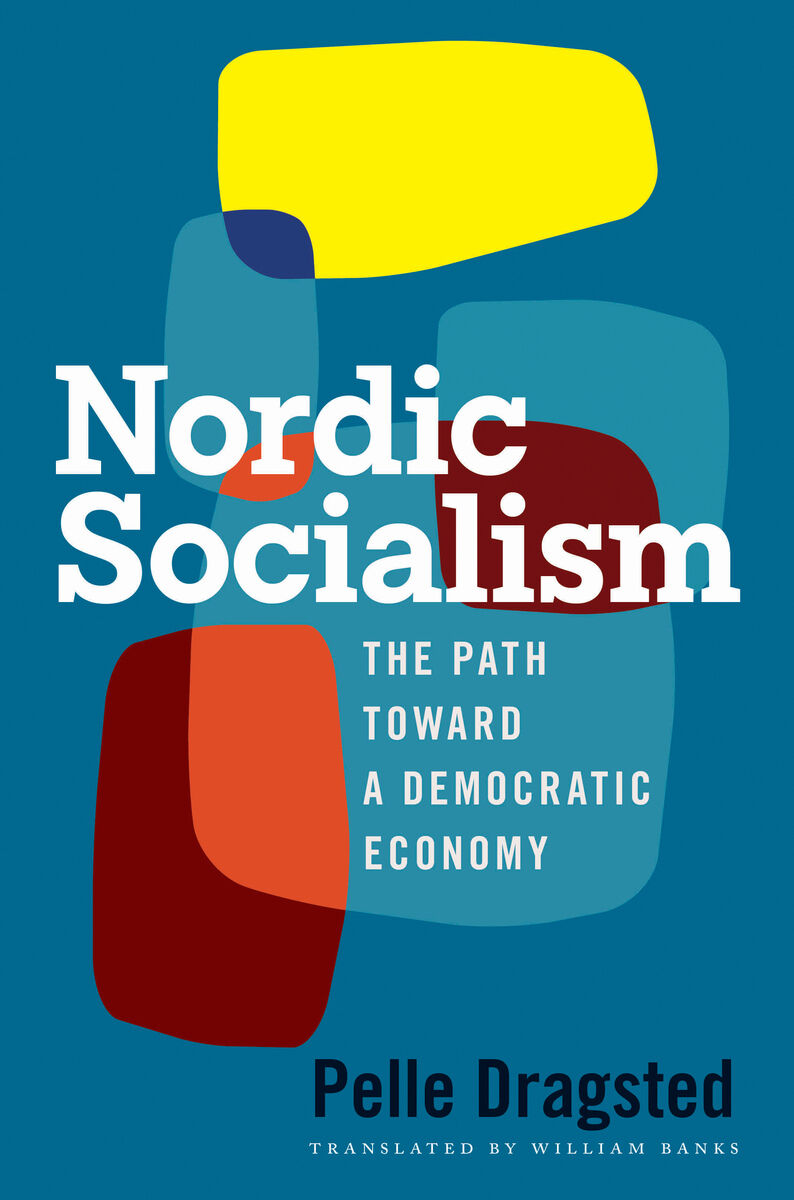
If someone were to ask me now to name a good book on democratic socialism, one that succinctly explained the idea, I would definitely recommend this new work, Nordic Socialism, by Pelle Dragsted. Published originally in Danish in 2021 and published in translation in English last year, this is far-and-away the best short introduction to democratic socialism I have ever read. Pelle Dragsted is a member of the Danish parliament and the political spokesperson for the Red-Green Alliance party in that country, and he has written an introduction to democratic socialism that is brief but also comprehensive and very readable.
While, as the title suggests, its focus is on experiments in economic democracy in Nordic countries, its scope is ultimately international, drawing on examples from around the world. Honestly, I can’t praise this book highly enough. We have long needed a good, short, up-to-date introduction to democratic socialism, and I believe that this is it.
Dragsted’s fundamental premise is that democratic socialism is not some utopian dream located off the future but an economic system that we can see working around us in our daily lives right now. Dragsted argues that all economies are mixed or ‘hybrid’: containing, to different degrees, both capitalist and socialist elements, and so the path toward a more democratic and equal economy is not about making a sudden revolutionary break from capitalism, but rather, about expanding and elaborating on the socialist elements that already exist.
Dragsted’s vision of democratic socialism is pluralistic, combining all the different forms of economic democracy that have been proven to work in the real world. In his vision, there would be a place for nationalization of essential services like education, healthcare and transportation, of course, but there would also be a place for worker, consumer and housing cooperatives, credit unions and building societies, social wealth funds, co-determination, strong labor unions and much else. Some of the economy would be planned, but most would be coordinated by carefully regulated markets, and Dragsted also isn’t against making limited space for some private enterprise as well.
Dragsted’s vision is not constrained by 19th century socialist doctrine, but rather, it is fully scientific, insisting that we look at the data and build democratic socialist systems based on real-world experience. Communism was an abject failure, but in contrast, Nordic socialism in the 20th century created some of the most prosperous, free and equal societies on the planet.
Since then, Nordic socialism has been significantly rolled back, not because it didn’t work, but because neoliberal ideology has taken over the world. But neoliberalism has also been an abject failure, and in this book, Dragsted makes a clear and reasoned case that if we want to meet the challenge of the climate crisis, if we want defeat the oligarchs and save our democracies, and if we want to build the free, fair and equal societies that we all deserve, it is time to bring back democratic socialism.


Entry points are always necessary, of course. I’m glad to hear your thoughts on Dragsted’s work. Their perspective of ‘hybrid’ capitalist / socialist economies seems close enough to mine for me to recommend to other’s as a good jumping off point, but also have enough novel substance that I won’t have to slog through a reading.
I will definitely add this to my reading list. Thank you.